
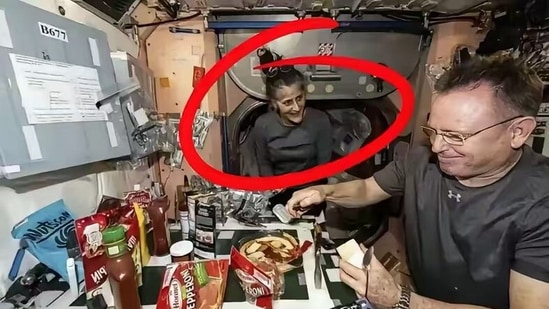
Sunita Williams, one of NASA’s most revered astronauts, continues to inspire millions with her remarkable career in space exploration. Known for her extensive time aboard the International Space Station (ISS) and her record-breaking spacewalks, Williams has redefined what it means to be an astronaut. As we enter 2024, her adventures have taken an unexpected twist, as recent developments in space technology have extended her stay in orbit well beyond what was originally planned.
In this article, we dive deep into Sunita Williams’ latest mission, the technological challenges she faces, and her profound impact on space exploration.
Main Points
Sunita Williams: A Veteran Astronaut
Early Life and NASA Career
Sunita Williams was born on September 19, 1965, in Euclid, Ohio, to an Indian-American family. Her early interest in aviation and engineering led her to join the U.S. Navy as a flight officer before becoming a NASA astronaut in 1998. Williams has spent a significant portion of her life in the skies, earning accolades for her service as a naval officer and astronaut.
Her first spaceflight took place in 2006 aboard the Space Shuttle Discovery as part of the STS-116 mission. Over her career, Williams has spent over 322 days in space, completing multiple spacewalks and conducting crucial scientific experiments aboard the ISS.
Record-Breaking Spacewalks
Williams is particularly known for her record-breaking achievements during her missions. In 2007, she set the record for the most spacewalks by a female astronaut at the time, completing a total of seven spacewalks. She surpassed 50 hours outside the spacecraft, contributing to the construction and maintenance of the ISS.
These accomplishments made her a pioneer in the field of space exploration and an inspiration to both women and aspiring astronauts worldwide.
The Latest Mission: Sunita Williams and the SpaceX Rescue
The Boeing Starliner Delay
In mid-2024, Sunita Williams and her fellow astronaut Butch Wilmore were part of a crew that was scheduled to return to Earth after completing their mission aboard the ISS. However, due to ongoing issues with Boeing’s Starliner capsule, NASA decided to delay their return. The Starliner, which was supposed to bring Williams and Wilmore back to Earth, experienced a series of technical failures, including thruster malfunctions and helium leaks. These issues made it unsafe for the astronauts to board the Starliner for their return journey.
As a result, NASA turned to a more reliable option—the SpaceX Dragon capsule. This decision marked a shift in the way NASA approached crew transportation, with SpaceX becoming a central player in ferrying astronauts to and from the ISS. Williams and Wilmore’s stay was extended by several months, with a new return date set for early 2025.
The Extended Mission
The mission, which was initially planned to last only a week, had now stretched into over three months aboard the ISS. This extended stay brought new challenges but also new opportunities for scientific experiments. Williams, with her extensive experience, played a key role in ensuring the continued success of the mission. She conducted research in microgravity, exploring new ways to advance human space exploration.
During this time, Williams also contributed to the ongoing efforts to prepare for future space missions, including NASA’s Artemis program, which aims to return humans to the Moon and eventually reach Mars.
Space Technology: The Role of SpaceX in Williams’ Mission
The Arrival of SpaceX Crew-9
In a remarkable turn of events, the SpaceX Crew-9 mission, commanded by NASA astronaut Nick Hague, arrived at the ISS to deliver new supplies and crew members. The Dragon capsule’s successful docking signified not only the safety of the mission but also the growing reliability of SpaceX technology. The capsule brought with it two new astronauts, adding to the ISS crew’s strength during a critical time.
The collaboration between NASA and SpaceX has been pivotal in overcoming delays caused by Boeing’s technical failures. With the Dragon capsule now playing a central role in human spaceflight, Williams’ mission has become a testament to the adaptability and innovation of modern space travel.
A Future-Oriented Astronaut: Sunita Williams’ Contributions
Leading the Way for Women in Space
Sunita Williams has always been a trailblazer for women in STEM and space exploration. As one of the few women to have spent such an extensive amount of time in space, she has broken numerous barriers. Her achievements have inspired countless young girls and women to pursue careers in science, technology, engineering, and mathematics.
Williams continues to mentor future generations of astronauts, advocating for more women to join space programs. She has spoken out on various platforms about the importance of gender diversity in the space sector and the need to create more opportunities for women in these high-tech industries.
New Research on the ISS
In addition to her role as an astronaut, Williams has always been an advocate for scientific research in space. During her extended stay, she has worked on a wide array of experiments aimed at understanding how microgravity affects the human body, materials science, and even plant growth. These studies are vital as NASA prepares for long-term missions, such as those to the Moon and Mars, where spacefarers will need to live and work in space for extended periods.
Williams’ research is also contributing to NASA’s efforts to make space travel safer and more efficient. With her extensive background in space science, she remains one of the foremost experts on the long-term effects of spaceflight on human health.
Challenges of Extended Space Missions
Psychological and Physical Impact
While Sunita Williams has faced the unique challenges of living in space for extended periods, she has also shared her personal experiences about the psychological and physical toll that spaceflight takes on astronauts. The isolation, the lack of a traditional day-night cycle, and the constant pressure to perform complex tasks have tested the mental and emotional resilience of every astronaut.
Despite these challenges, Williams remains positive and focused on her mission, constantly adapting and overcoming obstacles. Her ability to maintain a calm demeanor in the face of adversity has earned her the admiration of her peers.
Preparing for Mars: Lessons Learned
With NASA’s sights set on Mars, astronauts like Sunita Williams are playing a pivotal role in shaping the future of space travel. The lessons learned from her current mission aboard the ISS will inform the future of human space exploration, particularly for missions that will last years, not months.
Williams’ work on the ISS has already begun laying the groundwork for these longer, more arduous missions. From managing radiation exposure to optimizing life support systems, her efforts are crucial in ensuring that future astronauts can survive and thrive on the Red Planet.


